Optional readings will be posted here as we encounter new ideas during the course. If you’d like us to add something you think we’ve missed, let Kian know!
Whales Research Institute Archives by Various. Scientific Reports of the Whales Research Institute (1947-1987). An archive of the published reports of the Japanese Whales Research Institute, now Institute of Cetacean Research, which is part of Japan’s whaling industry. A grim reminder of how whaling has historically overshadowed cetacean research.
Trophic downgrading of planet Earth. by Estes, J.A., Terborgh, J., Brashares, J.S., Power, M.E., Berger, J., Bond, W.J., Carpenter, S.R., Essington, T.E., Holt, R.D., Jackson, J.B. and Marquis, R.J. Science (2011). A landmark paper on the ecological importance of apex predators.
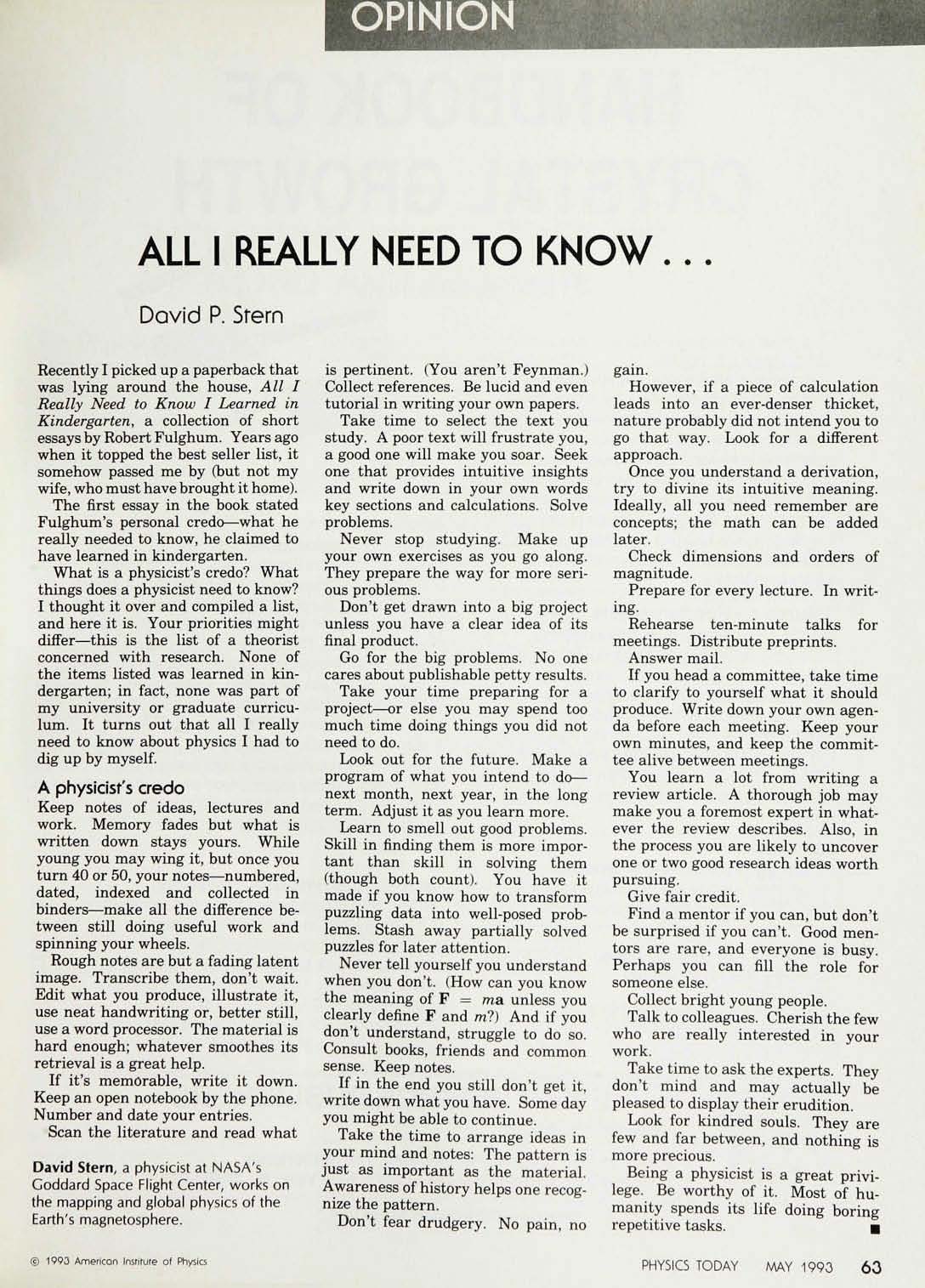
All I really need to know… by Stern, D. Physics Today (1993). Some values for practicing scientists.
In December, we assigned Spying on Whales and How to Speak Whale as your winter break reading assignments. Below is a fuller list of highly recommended reading material:
Spying on Whales, by Nick Pyenson. The past, present, and future of whales, illuminated by modern DNA science.
How to Speak Whale, by Tom Mustill. How modern science and machine learning are being used to study cetacean communication.
Among Whales, by Roger Payne. Payne was part of the team that first discovered the structure of whalesong. He was one of the foremost experts on the Southern Right whales of Patagonia, and a close friend of the novelist Cormac McCarthy. This memoir recounts his life in science, and his immersion in the mystery and beauty of nature.
At the Water’s Edge, by Carl Zimmer. A history of two important evolutionary transitions: fins to limbs (our Devonian ancestors arriving on land), and much later, limbs to fins (wherein some mammals returned to the deep).
The Human Impacts Database. Useful quantities describing the interactions of humans with Earth’s land, oceans, atmosphere, flora and fauna.
The Bionumbers Database. An incredibly handy collection of numbers from the molecular and cell biology literature.
Street-Fighting Mathematics: The Art of Educated Guessing and Opportunistic Problem Solving. This excellent free book by Sanjoy Mahajan (a Caltech alum!) teaches order-of-magnitude estimation in the same style that we will employ throughout the course. Essential reading for those curious to explore more advanced techniques than those we will cover.
Order-of-Magnitude Physics: A Textbook with Applications to the Retinal Rod and to the Density of Prime Numbers. Mahajan’s original Caltech PhD thesis, which later evolved into another excellent free textbook.
Be/Bi 103: Data Analysis in the Biological Sciences, Justin Bois/Caltech
Probability Distribution Explorer, Justin Bois
Statistics 110: Probability, Joe Blitzstein/Harvard